

Key takeaways
- Mentorship does not create a consistent baseline across a growing cohort.
- A partner academy turns domain knowledge into an explicit readiness requirement.
- Readiness assessments expose integration and pilot risks before expensive introductions.
- Cohort analytics help ecosystem teams manage maturity, engagement and intervention.
- Education can make partner access more credible, measurable and commercially useful.
Mentorship leaves readiness to chance
Partner and accelerator programs often promise access. They select promising fintechs, arrange expert sessions, introduce buyers and create visibility with investors or strategic partners. The model is useful, but it becomes operationally uneven as a cohort grows. Each startup arrives with a different grasp of the market, product constraints, commercial model and integration process.
Mentors then spend time repeating the same foundations. Partnership teams cannot tell who is ready for a technical discussion, who needs help shaping a use case and who is still unclear on the value exchange. Introductions happen on calendar availability rather than partner readiness. That wastes scarce attention on both sides.
The pattern is already visible in large ecosystem programs. Mastercard’s 2026 For Fintechs program combines strategic connections with Academy learning sessions, masterclasses, thematic sessions and networking. The important signal is not the format alone. It is that ecosystem access increasingly needs structured preparation.
The academy sits between selection and access
A partner academy is the missing layer between accepting a fintech into a program and putting it in front of customers, banks, networks or platform teams. It gives every participant a shared operating baseline before high-value conversations begin.
This is fintech partner training, not generic startup education. The academy should be mandatory enough to shape behaviour, but flexible enough to fit a founder’s schedule. Short self-paced modules can carry the common knowledge. Live clinics should focus on real implementation decisions. Office hours should address exceptions, not repeat the curriculum.
That design also protects the commercial side of the program. Mastercard’s Start Path expansion into corporate solutions is built around connecting fintech innovators with customers and partners to co-create payment solutions. A structured learning layer helps ensure those conversations start with a clearer use case, better preparation and realistic next steps.
Readiness must be taught and tested
Strong fintech accelerator education teaches participants how the ecosystem works and then asks them to apply it. Completion alone is not enough. A recorded webinar view does not show whether a team can navigate an integration, define a pilot or explain its value to the right stakeholder.
A practical partner academy should cover four areas:
- Ecosystem context, including the partner’s business model, customer segments, decision makers and commercial constraints.
- Solution fit, including the problem addressed, target workflow, differentiation and evidence behind the opportunity.
- Integration readiness, including technical architecture, implementation dependencies, security expectations and delivery ownership.
- Pilot design, including success measures, stakeholder roles, timeline, risks and a credible path to market.
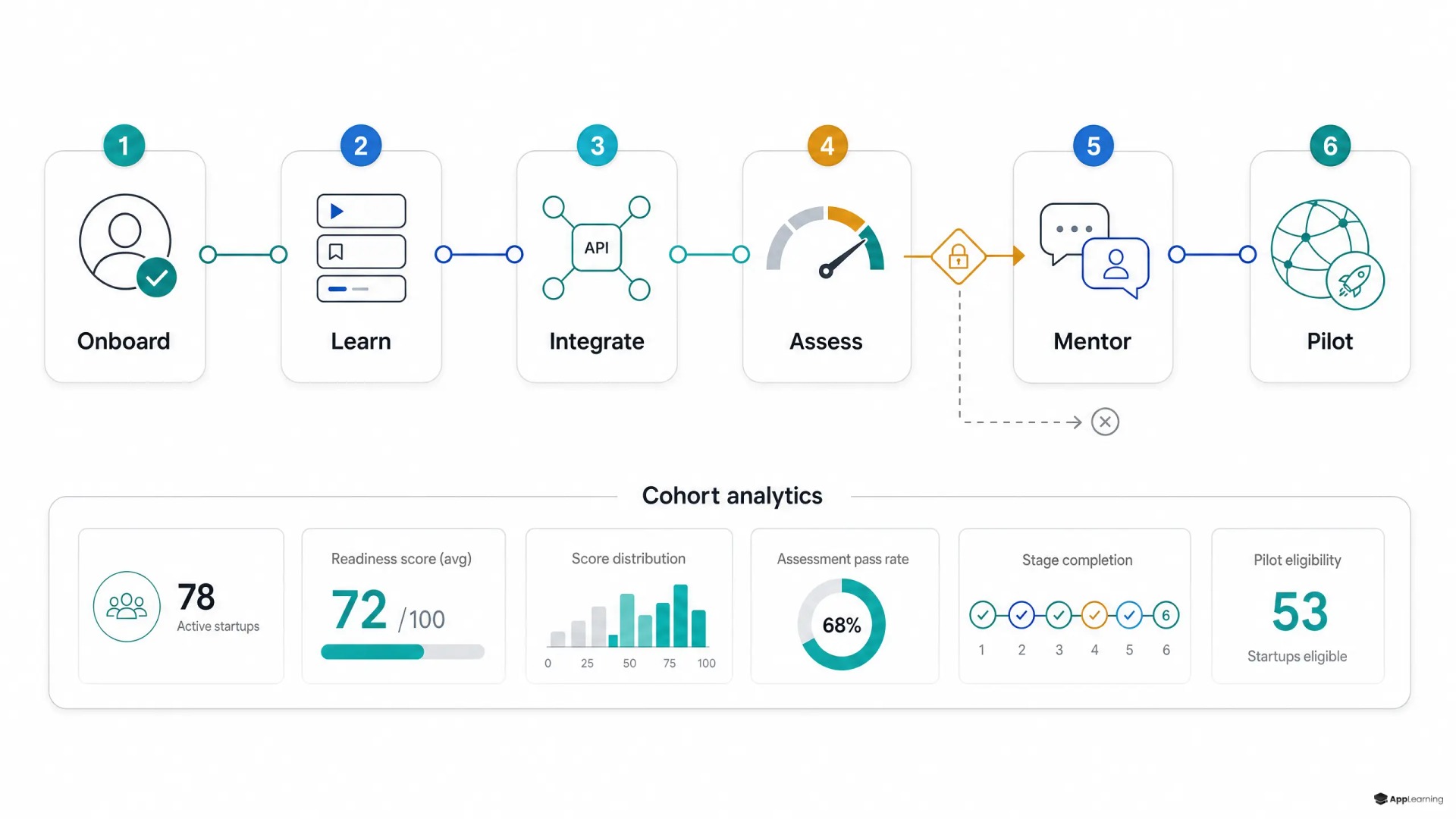
Assess these areas with scenario questions and working artefacts. Ask teams to map an integration journey, identify missing dependencies, build a pilot scorecard or tailor a partner pitch to a specific buyer. The output creates evidence of partner readiness rather than a vague sense that a startup was engaged.
Cohort data turns support into a managed system
Learning data gives ecosystem teams an early operating view of the cohort. It can show which firms have not started essential modules, where assessment scores cluster, which roles engage with the material and where teams stall. That makes intervention more precise than waiting for a monthly check-in or a failed introduction.
The useful metric is not course completion in isolation. Teams should combine progress, assessment evidence, submitted artefacts and attendance at targeted sessions into a simple readiness view. A partner manager can then decide whether to offer technical support, commercial coaching, peer examples or an introduction.
This matters as fintech capabilities change fast. Mastercard’s Innovation Circuit uses hands-on sessions to help ecosystem participants examine connected topics such as identity, tokenization, fraud prevention and AI-driven payments. Program education must likewise be updated as the integration and market context changes.
Good to know
What makes a partner academy different from a webinar series?
A webinar series distributes information. A partner academy sequences role-based learning, requires application, captures assessment evidence and connects completion to concrete program decisions.
Which teams should use a fintech partner academy?
Payment networks, banks, fintech platforms, venture programs and accelerators can use one when they need to prepare external teams for complex commercial or technical collaboration.
Should academy completion be required before partner introductions?
Require the core path before high-value introductions, while allowing targeted exceptions for mature teams with clear evidence of readiness. The gate should protect time, not create bureaucracy.
Graduation should unlock market access
The academy has most value when it changes program flow. Do not treat certificates as a decorative reward at the end of a cohort. Link completion to specific privileges, such as partner introductions, sandbox access, technical workshops, demo days or pilot consideration.
A graduation gate might require a passed readiness assessment, an approved integration plan, a named commercial sponsor and a defined pilot hypothesis. This does not guarantee a deal. It does ensure that the next conversation begins with a prepared team and a shared record of what has been validated.
Build a partner academy that turns ecosystem access into measurable readiness.
BuildBranded enablement becomes an ecosystem asset
For a Head of Growth at a fintech, this model also creates an education-led acquisition surface. A well-run academy shows potential partners how to work with the platform, reduces confusion around a complex product and produces credible proof of maturity before a sales process begins. It can support activation and retention as well as ecosystem enablement.
App-Learning can provide the operating layer for a branded partner academy: role-based paths for founders, product leads and technical teams; integration readiness checks; certificates; and cohort analytics for ecosystem managers. The goal is not to replace expert relationships. It is to give those relationships a common system, clear evidence and better timing.
The best partner programs will not measure success by the number of webinars delivered or introductions made. They will know which teams are ready, why they are ready and what action should follow. That is how ecosystem access becomes a repeatable capability rather than a series of well-intended events.