
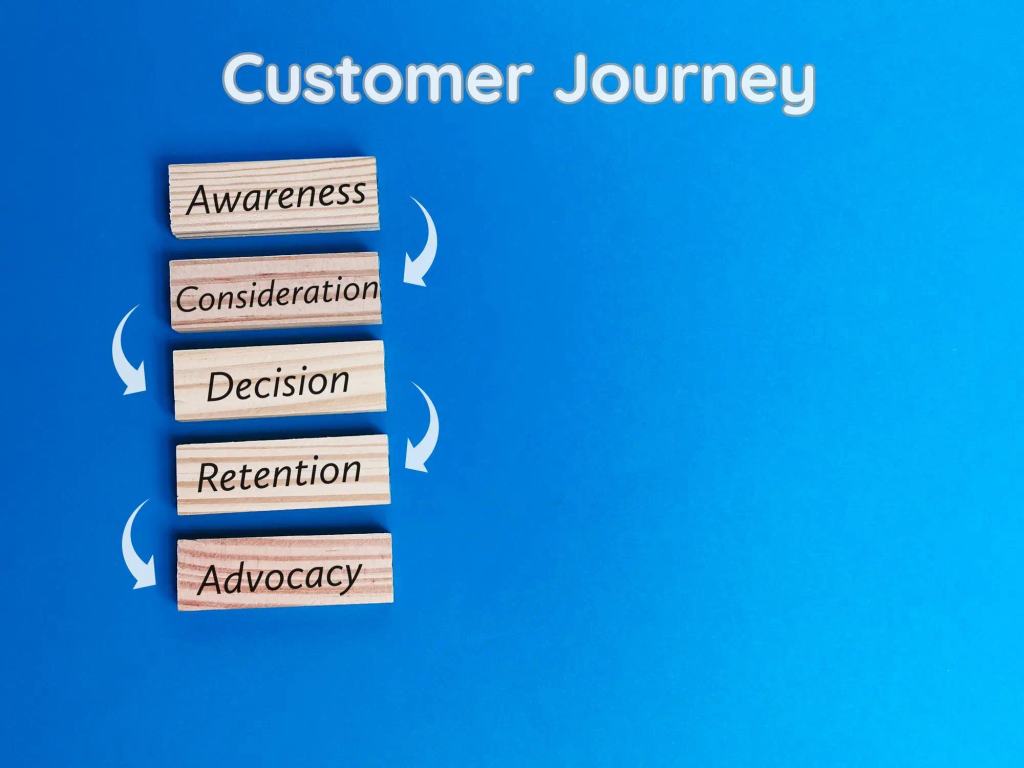
Key takeaways
- Onboarding and education solve different stages of the customer journey.
- Education reduces the risk that users stall after activation.
- Lifecycle learning supports retention, trust, and expansion.
- App-Learning fits teams that need structured education after first value.
The handoff after first value
Customer onboarding is the designed path from signup, purchase, or implementation to the first value moment. Customer education is the structured learning system that helps users build competence after that moment. The practical answer to customer onboarding vs customer education is not choosing one. Onboarding starts the journey. Education sustains it.
Forrester frames onboarding as the on-ramp to customer value and ties faster time to value to retention and account growth. That is the right starting point. But in complex products, first value is not the same as lasting value. A user may complete setup, connect an account, or make a first transaction and still not understand enough to return with confidence.
Education keeps activation from decaying
Fintech onboarding often contains sensitive steps: identity checks, bank connections, deposits, trading permissions, tax fields, risk disclosures, wallets, limits, and security settings. The user is not only learning the interface. They are deciding whether they trust the system. If customer onboarding education stops when the checklist is complete, the next difficult action becomes a new drop-off point.
This is where a customer education strategy changes the operating model. It turns learning from a launch asset into a lifecycle layer. According to Skilljar’s 2025 customer education trends report, customer education now spans the customer journey and is increasingly tied to retention, product adoption, and revenue rather than only course completion.
Two systems with different jobs
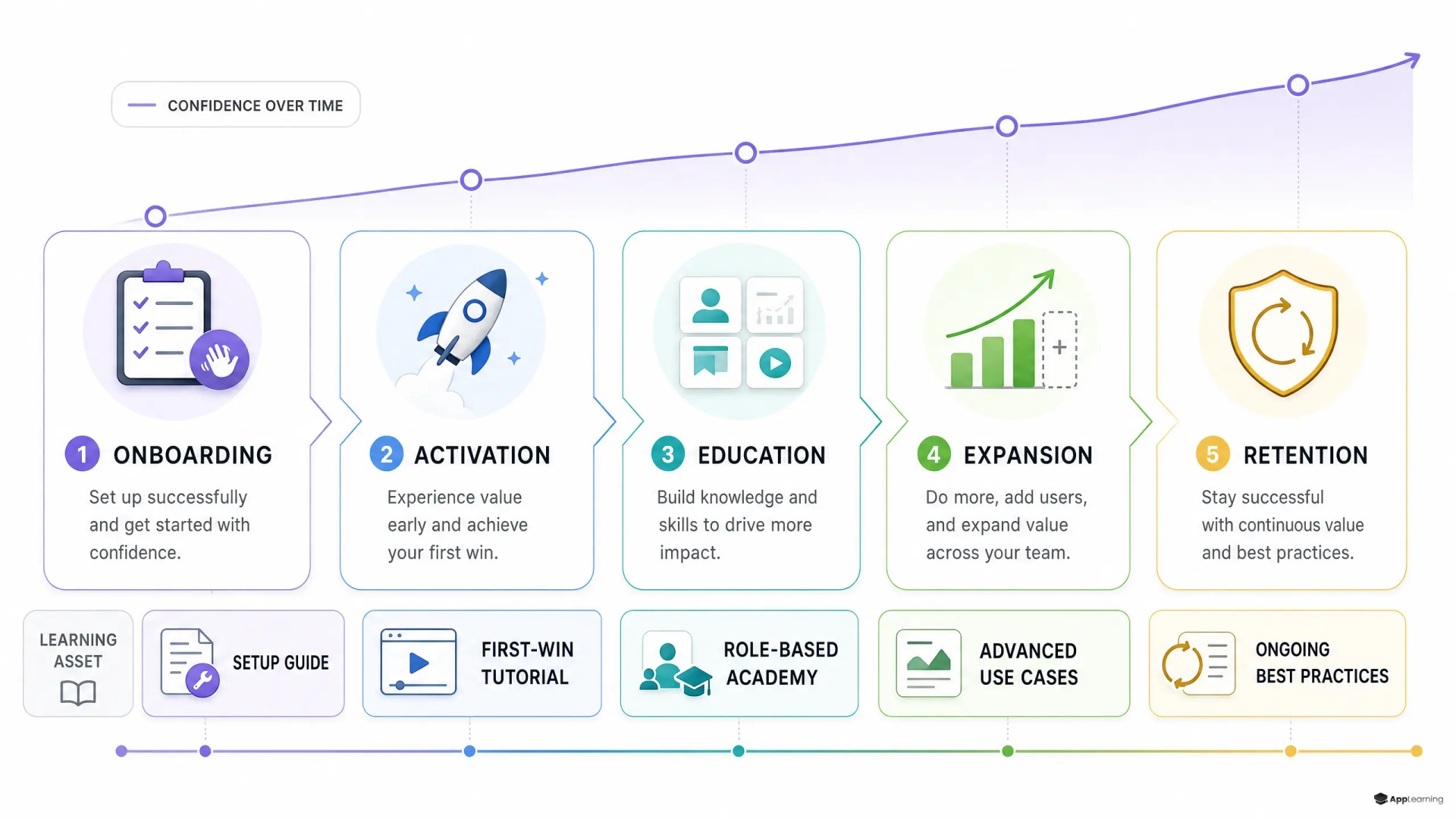
Onboarding and education should share content, data, and ownership signals. They should not share the same success definition. Treat them as connected systems with different jobs.
- Goal: onboarding moves the user to first value; education builds repeatable product confidence.
- Timing: onboarding is front-loaded; education appears at new features, new risks, and deeper use cases.
- Content: onboarding removes immediate friction; education explains concepts, decisions, and workflows.
- Metrics: onboarding tracks activation and time to value; education tracks learning completion, behavior change, support deflection, retention, and expansion signals.
- Ownership: Product and Growth own journey outcomes; CX, Marketing, Compliance, and Education help make the learning layer accurate and reusable.
Good to know
Should product teams build onboarding or education first?
Build the onboarding path first, but design the education map at the same time. If education is added later, it often becomes scattered support content instead of a lifecycle system.
Is customer education only a course academy?
No. An academy can help, but customer education also includes embedded lessons, explainers, quizzes, emails, support flows, certifications, and in-product guidance.
Who should own customer education in a fintech company?
Product and Growth should own the outcome metrics. Education, CX, Marketing, and Compliance should co-own the content system so explanations stay clear, accurate, and reusable.
Complex fintech products need learning moments
A crypto app may need onboarding to help a user create a wallet. Education must later explain network fees, custody models, recovery phrases, staking risks, and transaction finality. A wealth product may onboard a user into a first portfolio. Education must later support rebalancing, volatility, tax documents, and goal changes. A payments platform may activate a merchant with a first transaction. Education must then explain disputes, chargebacks, settlement timing, fraud rules, and reporting.
Gainsight’s customer education resource hub frames digital education around convenient and just-in-time learning. That principle matters in fintech because users rarely need a full course before acting. They need the right explanation at the decision point, in the language of the next safe step.
This is the App-Learning angle. App-Learning is not a replacement for a product tour or help center. It is a structured learning layer for teams that need short lessons, quizzes, progress data, and reusable explanations across onboarding and lifecycle journeys. In fintech contexts, App-Learning’s product education guidance focuses on embedding learning where users hesitate, not hiding it in a separate academy.
Build lifecycle learning into the moments where users hesitate.
TalkA lifecycle framework teams can run
A useful lifecycle learning framework starts with value moments, not content ideas. Map the first five actions that create value. Then map the next five moments where users stall, misuse the product, ask support for help, or avoid a higher-value feature. Each moment needs one clear learning job.
- Name the value moment and the behavior that proves it happened.
- Define the user decision that blocks progress.
- Attach one small learning unit to that decision.
- Reuse approved explanations across product, email, support, and success teams.
- Measure learning data beside activation, retention, feature adoption, and support volume.
- Refresh the learning unit when the product, regulation, or user behavior changes.
Customer onboarding should feel like acceleration. Customer education should feel like infrastructure. Companies that treat onboarding as a one-time checklist keep rebuilding trust every time users face a new decision. Companies that connect onboarding and education build a learning system that compounds: users understand faster, act with more confidence, return for more advanced use cases, and give the product more chances to prove its value.