

Key takeaways
- ZTBL’s October 19–23 programme links rural outreach, underserved groups and a planned digital-payments...
- Give workshops and digital follow-up distinct learning objectives and tracking events.
- Measure comprehension, confidence, safe first use and retention separately from accounts opened.
- Build in local languages, accessible formats, separate consent choices and easy opt-out.
- Extend workshops through agent training, scenario quizzes and optional nudges without claiming causal impact.
From Village Literacy Camp to First Financial Action
The workshop ends. A participant understands digital payments but hesitates at the confirmation screen. Counting that person as “reached” says nothing about readiness. Financial literacy outreach needs a second measure beyond attendance—whether someone can choose and complete a useful action safely.
The village programme connects learning and access
ZTBL’s published programme for Pakistan Financial Literacy Week, October 19–23, 2026, lists rural camps and on-the-spot account facilitation wherever feasible on October 19. October 20 focuses on youth, women and underserved groups, including people with disabilities. October 22 lists a festival at a digitally enabled village focused on digital banking, cashless transactions and payments.
These are announced activities, not verified attendance, completed accounts or measured impact. The design proposals below are not descriptions of ZTBL’s implementation.
Four steps with a genuine exit
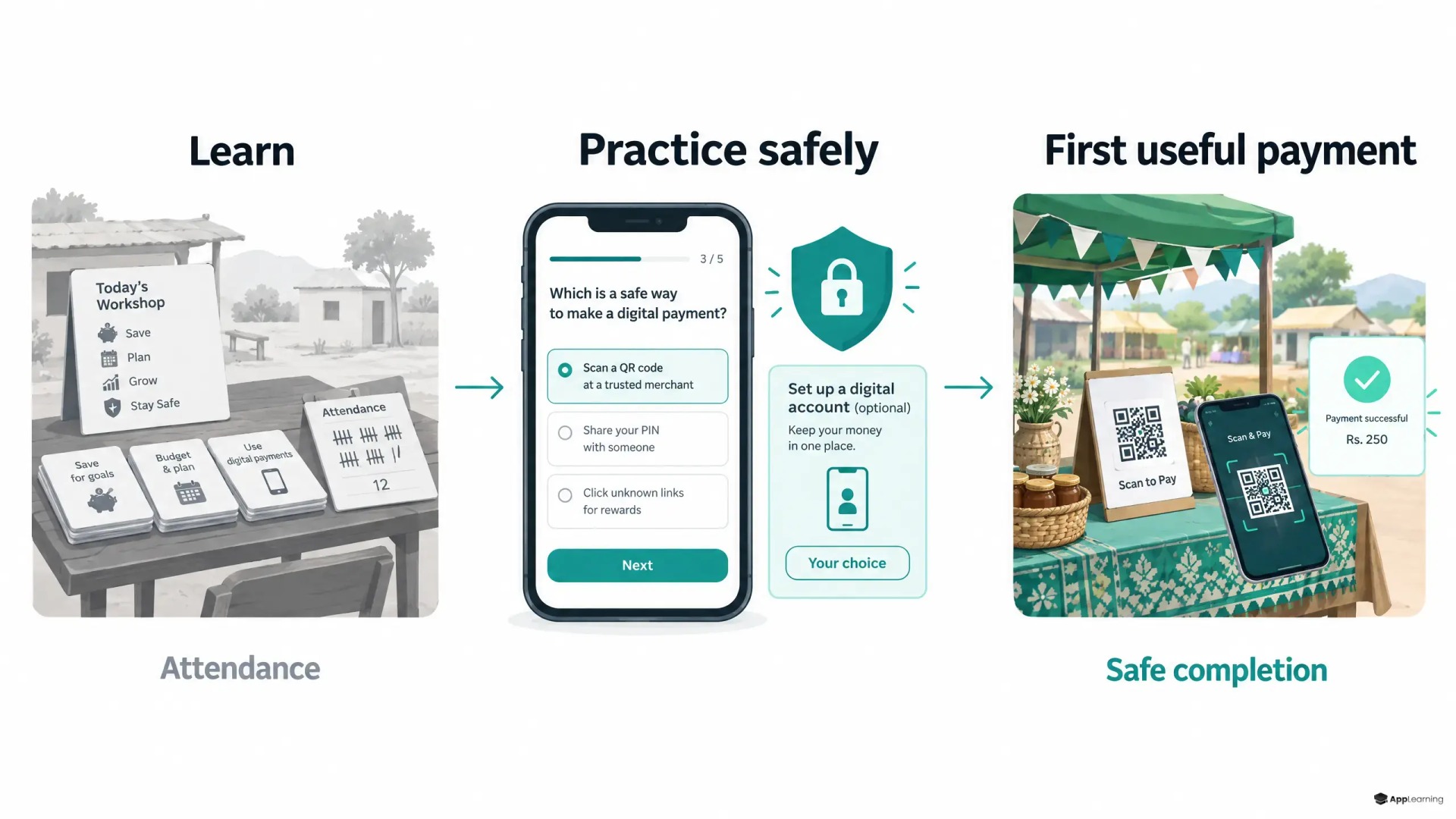
Structure embedded financial education around four steps. Apply the same sequence to branchless banking onboarding.
- Learn one task, such as checking a payment’s recipient, amount and fee before confirmation.
- Practice with fictional details and no money at risk. Include a wrong-recipient scenario and a request for a secret code.
- Choose whether to continue. Keep lessons available without account opening, marketing permission or follow-up registration.
- Act through the provider’s approved channel, under the customer’s control. Check the receipt and explain where to get help.
Separate learning evidence from account counts
The OECD’s 2026 measurement toolkit distinguishes financial knowledge, behaviour and attitudes. A World Bank research review finds effects on knowledge and behaviour, but substantial variation across interventions. Neither establishes this programme’s results.
Build separate measures for each stage.
- Reach through attendance and voluntary follow-up enrolment.
- Comprehension through a brief scenario before and after learning.
- Confidence through self-report, kept separate from demonstrated skill.
- First use through transaction status paired with a safety check.
- Retention through later knowledge recall and repeat useful use.
Define denominators and observation windows before launch. Linked events show sequence, not causation. Follow the World Bank’s counterfactual approach when designing an evaluation of whether education caused additional activation.
Connect channels without centralising sensitive data
An App-Learning mobile, white-label academy could bridge the workshop and optional follow-up through local-language audio, low-data lessons and scenario quizzes. Use field agent learning to rehearse explanations, consent and escalation.
Give facilitators session codes. Let the academy record learning events, banking systems confirm account and payment status, and CRM manage permitted follow-up. Join only necessary events through pseudonymous identifiers. Keep identity documents, PINs and one-time codes out of learning analytics. Treat nudges as optional support, not pressure to transact.
Design a consent-led learning journey with App-Learning.
DiscussProtect the boundary before optimising activation
The OECD Recommendation on Financial Literacy calls for a clear distinction between commercial and educational activities, without promoting providers’ products during financial-literacy activities.
Make any handoff to selling explicit and optional. Separate learning registration, analytics linkage, marketing permission and account-opening consent. Offer accessible formats and non-digital alternatives. Route personalised recommendations through the appropriate authorised advice process. Reward agents for accurate explanations and safe escalation, not account volume alone.
Digital finance activation is worth measuring, but it cannot define educational success. The stronger system helps people understand, practice and decide—including deciding not to proceed—and can show exactly where learning ends and a commercial relationship begins.