

Key takeaways
- Low complaint volume is not reliable evidence of good bereavement support.
- Effective learning design follows the case journey rather than policy wording alone.
- Sensitive branching scenarios need explanatory feedback, not speed targets or leaderboards.
- Learning analytics and service outcomes require separate measures.
- Fee defects and broken handoffs remain operational responsibilities.
The Bereavement Case That Never Becomes a Complaint
Consider a bereaved representative who receives another document request, cannot identify the case owner and stops chasing an unexplained charge. No complaint follows. A dashboard might look healthy while the case remains unresolved. For L&D, the task is to rehearse the decisions behind that experience—not simply certify that staff have read the policy.
The review tests existing UK expectations
In its 23 November 2026 announcement, (fca.org.uk) the FCA described a review of investment firms’ processes, data and 36 case summaries, covering advisers, wealth managers and platforms. This is UK supervisory work under existing Consumer Duty expectations, not a new global rule. Banking, fintech and crypto teams should check applicability to their products and entities.
The findings provide a useful brief for FCA Consumer Duty training. They do not prove that microlearning improves case handling.
Four decisions define the learning design
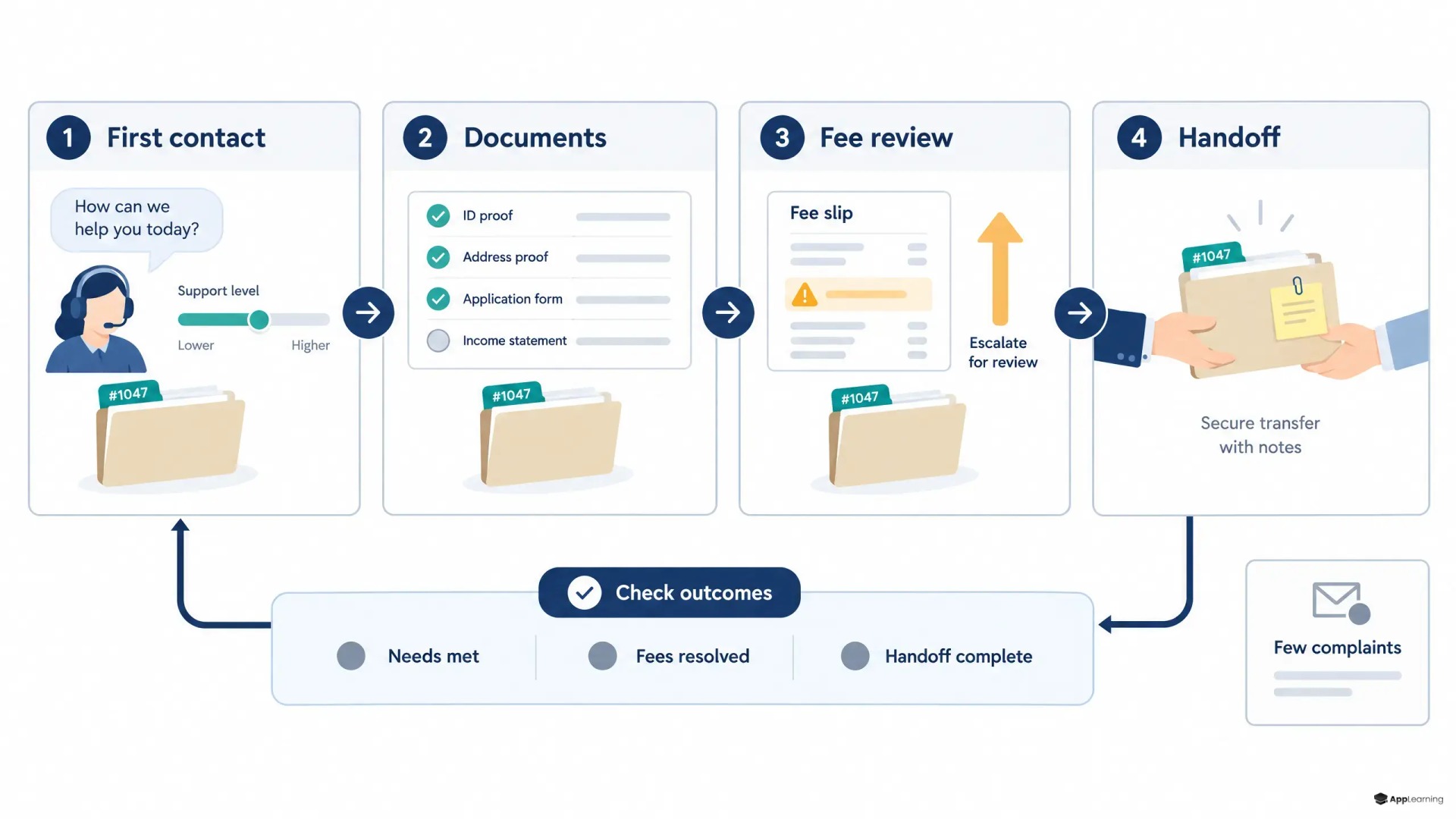
In its bereavement findings, (fca.org.uk) the FCA distinguishes evidence needed to record a death from evidence needed to release estate assets. It also expects support to adapt as needs change. A proposed scenario-based compliance training sequence should therefore follow the journey.
- First contact covers recognising support needs, agreeing a contact channel and explaining the next step.
- Evidence handling separates documents needed now from later requirements and checks what is already held.
- Fee review distinguishes continuing services from discontinued advice and routes disputed charges for review.
- Escalation records the obstacle, receiving owner and promised update so the next team can act.
Bereavement training in financial services should test these decisions together. Vulnerable customer training should assess individual needs rather than teach a single response to everyone experiencing loss.
One fictional case exposes different role gaps
In a synthetic case, Maya reports her father’s death, explains that she already uploaded a certificate and asks about an advice fee. The learner chooses between resending a generic checklist and checking the record before agreeing the next step.
Frontline feedback should explain the repeat-request risk. Operations feedback should test evidence checks and ownership. A supervisor branch should test escalation and whether someone accepts responsibility. Feedback should explain consequences without timers, points or leaderboards.
In its published recommendations, (fca.org.uk) the FCA says ongoing advice fees should stop when the related service is no longer provided. The scenario should distinguish this from charges for continuing services, rather than reward a blanket promise that every fee stops.
The academy and the service need separate scorecards
At App-Learning, we would structure a branded staff academy around role-specific scenarios, compliance-approved branches and versioned feedback. Decision-level analytics should capture choices, reasoning and delayed retention—not just completion.
In its wider vulnerability review, (fca.org.uk) the FCA warned that process outputs and training records alone may not reveal customer outcomes. Operational managers need a separate service view.
A pilot should use synthetic scenarios and anonymised, aggregated service data. Scenario accuracy and retention need a baseline. Service measures should cover handoff completeness, unnecessary repeat requests, resolution time and qualitative case review. Comparisons must account for case complexity, probate delays and concurrent process changes before attributing improvements to training.
Design a bereavement learning pilot with App-Learning.
DiscussProcess ownership cannot sit inside a course
L&D should own rehearsal and learning evidence. Operations should own handoffs and queues, while accountable fee owners correct charging defects. Training can prepare staff to recognise and escalate a broken process. It cannot repair that process for them. The standard is not a completed course or an empty complaints inbox, but a case handled without avoidable burden.